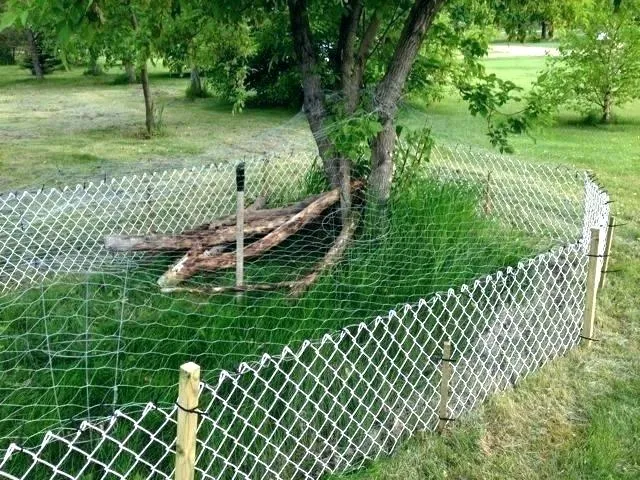
On an ordinary house lot in Greater Cleveland, plan on the person who wants the fence paying for it, unless the neighbor agrees to share. Ohio has a partition fence law in Ohio Revised Code Chapter 971, but it is a farm and livestock law. Section 971.03 says the chapter does not apply to the enclosure of lots in municipal corporations, which means lots inside a city or village.
This page is general information, not legal advice. For a dispute, talk to your city or to a lawyer.
Does my neighbor have to pay for half of a new fence?
Not under Ohio's partition fence law, if you live in a city. Chapter 971 of the Ohio Revised Code deals with fences on the line between rural properties, mainly where livestock is kept. Section 971.03 takes lots in municipal corporations out of the chapter, along with land outside a city that has been laid out into lots. So in Cleveland and its suburbs a shared yard fence is paid for by agreement between the two owners. The same goes the other way: if a neighbor says you owe half of their fence, ask what rule or written agreement they are relying on.
Who owns the fence between two properties?
A fence belongs to the owner of the land under it. One that stands exactly on the line with both owners' consent is best treated as shared, with decisions made jointly. If no one knows, a survey will show which side the posts are on.
Can my neighbor put up a fence without asking me?
Generally yes, when it is on their own land and meets the city's rules for height, material and permits. A few cities ask for more on shared lines or shared driveways, so check with your building department. A fence that blocks a driveway both houses have a right to use is a different matter, and one for a lawyer.
A survey shows the fence is on the wrong side of the line. Now what?
Talk to the neighbor first. The fence can be moved to the surveyed line, or the two owners can sign an agreement that lets it stay. A real estate lawyer can tell you what a long-standing fence line means for your lot. We can take down a fence and rebuild it on the right line.
The contractor built my new fence over the property line. Who fixes it?
The contractor should, if they picked the line or went past the stakes. Ask them in writing to move it at their cost. Your position is weaker if you showed them where to build. A good quote states where the fence goes and who marked the line.
My neighbor and I agreed to split a new fence. How does the billing work?
Put the agreement on paper before work starts: the route, the material, the height, the total and each owner's share. We can list the shared run separately on the estimate and show what each of you owes.
The house next door is a rental and I cannot reach the owner. Can I build on my side?
In most cities, yes. A fence wholly on your own lot does not usually need the neighbor to sign anything, though it must still meet the fence rules. Have the line staked first so there is no argument afterward.
The old fence on our side is rotted and the neighbor will not pay. Can I take it down and rebuild?
If it is on your lot, it is yours and you can. If it is on the line, or you cannot tell whose it is, give the neighbor written notice before removing it and keep a copy.
My neighbor's tree roots are lifting our fence. Who handles that?
It takes two trades. An arborist assesses the roots and we handle the fence. No large root should be cut until the arborist has looked, since that can destabilize or kill the tree. We can often shift a post to the side of the root and bridge across it.
A business next door stacks material against my chain link fence and it is bending. Can it be reinforced?
Yes. Heavier posts, a bottom rail or a tension wire on your side all help. It still will not hold back a load like a retaining wall. Ask the owner in writing to move the material, and report it to the city if it continues.
The only real price is one measured in your yard. The estimate is free and comes in writing. Call (216) 238-3677 or text us a photo of the fence line.